
The future of mobility is changing rapidly, and Kenya is at the center of East Africa’s green transport revolution. But while electric vehicles (EVs) are making headlines, one question remains: Is Kenya truly ready to go fully electric, or do hybrid vehicles still make more sense for the average Kenyan driver?
Let’s take a closer look at the current state of Kenya’s automotive market.
Kenya’s Automotive Market Today
Kenya has long been dominated by imported used Japanese vehicles, with Toyota, Nissan, Honda, Mazda, and Subaru leading the market. While petrol-powered vehicles remain the majority, the demand for fuel-efficient alternatives has grown significantly over the past five years.
The rising cost of fuel, environmental concerns, and government incentives have encouraged more buyers to consider hybrid and electric vehicles. Models such as the Toyota Aqua, Toyota Prius, Nissan Note e-Power, Honda Fit Hybrid, and Lexus hybrid series have become increasingly common on Kenyan roads because they offer excellent fuel economy without requiring any change in driving habits.
At the same time, fully electric vehicles from brands like Dongfeng, Neta, BYD, Tesla, Hyundai, Kia, Nissan, and locally assembled electric buses are slowly entering the market.
The question is no longer if Kenya will adopt EVs—but how fast.
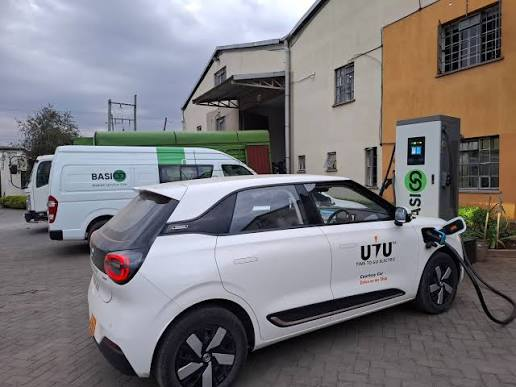
Kenya Is Making Significant Progress Toward Electric Mobility
The Kenyan government has shown strong commitment to promoting electric mobility.
In early 2026, the Ministry of Roads and Transport officially launched the National Electric Mobility Policy to encourage investment, improve charging infrastructure, reduce fuel imports, and lower carbon emissions. The government has also introduced incentives such as VAT exemptions on selected electric mobility products and tax reductions designed to make EV ownership more affordable.
Kenya is uniquely positioned for EV adoption because more than 90% of its electricity comes from renewable energy sources such as geothermal, hydroelectric, wind, and solar power. This means driving an EV in Kenya can have a much smaller environmental footprint compared to many countries.
Why Electric Vehicles Make Sense
There are several reasons why many experts believe EVs represent the future.
Lower Running Costs
Electricity is considerably cheaper than petrol or diesel. Charging an EV can cost a fraction of what drivers spend on fuel each month, especially for those with predictable daily commutes. Kenya Power has even introduced special e-mobility electricity tariffs to encourage EV charging.
Lower Maintenance
Electric vehicles have fewer moving parts than internal combustion engines.
There are:
- No oil changes
- No spark plugs
- No timing belts
- Fewer mechanical components that wear out
This translates into lower servicing costs over the vehicle’s lifetime.
Better for the Environment
With zero tailpipe emissions, EVs contribute to cleaner air and help reduce greenhouse gas emissions—particularly important in growing urban centres like Nairobi and Mombasa.
The Challenges Holding EVs Back
Despite the progress, Kenya still faces several obstacles before EVs become the mainstream choice.
Limited Charging Infrastructure
Although charging stations are increasing, they remain heavily concentrated in Nairobi and a few major towns.
Drivers travelling to rural counties or across long distances may still experience “range anxiety,” making EV ownership less practical for many Kenyans. Industry estimates suggest that while charging infrastructure is expanding, coverage is still limited compared to the country’s fuel station network.
Higher Purchase Prices
Although government incentives are helping reduce costs, most fully electric vehicles still have a higher upfront price compared to similar petrol or hybrid models.
For many Kenyan households, purchase price remains the biggest deciding factor.
Limited Technical Support
EV technicians are becoming more common, but the country’s service network is still developing.
Outside major cities, qualified EV repair specialists and parts can be difficult to find.
Why Hybrids Continue to Dominate
For many buyers, hybrid vehicles currently offer the perfect balance.
No Charging Required
Unlike EVs, hybrids charge themselves while driving through regenerative braking and the petrol engine.
Drivers simply refuel at any petrol station.
Excellent Fuel Economy
Many popular hybrid models deliver between 20–30 km per litre depending on driving conditions, making them ideal for Kenya’s stop-and-go urban traffic.
Proven Reliability
Toyota’s hybrid technology has built an excellent reputation worldwide.
Kenyan mechanics are increasingly familiar with hybrid systems, spare parts are readily available, and resale values remain strong.
Perfect for Long-Distance Travel
Whether you’re driving from Nairobi to Mombasa, Kisumu, Eldoret, or crossing into neighbouring countries, hybrids offer the flexibility of petrol with significantly lower fuel consumption.
EV vs Hybrid: Which Makes More Sense in Kenya?
| Factor | Electric Vehicle | Hybrid Vehicle |
|---|---|---|
| Fuel Cost | ★★★★★ Lowest | ★★★★☆ Very Low |
| Maintenance | ★★★★★ Lowest | ★★★★☆ Low |
| Long Distance Travel | ★★☆☆☆ Limited by charging | ★★★★★ Excellent |
| Charging Needed | Yes | No |
| Infrastructure | Still Developing | Already Established |
| Purchase Price | Higher | More Affordable |
| Resale Market | Growing | Well Established |
So, Is Kenya Ready for Full EV Adoption?
The answer is not quite—but it’s getting there.
Kenya has made impressive progress in developing policies that support electric mobility. EV registrations have grown rapidly, electricity consumption for charging has increased sharply, and investment in charging infrastructure continues to rise.
However, the average Kenyan driver still faces practical realities:
- Long-distance travel is common.
- Public charging stations remain limited.
- Used hybrids are more affordable.
- Hybrid servicing is widely available.
- Fuel stations are everywhere.
For these reasons, hybrids currently offer the best balance of affordability, convenience, and efficiency for most buyers.
The G-Max Motors Perspective
At G-Max Motors, we believe the future of Kenya’s automotive industry is not a competition between EVs and hybrids—it’s a gradual transition.
If your daily driving is mostly within Nairobi and you have reliable access to charging, a fully electric vehicle can significantly reduce your running costs.
However, if you frequently travel across the country or want maximum flexibility without worrying about charging infrastructure, a hybrid remains the smarter investment today.
As Kenya’s charging network expands and EV prices become more affordable, fully electric vehicles will undoubtedly become a larger part of our roads. Until then, hybrids continue to offer the most practical bridge toward cleaner, more efficient transportation.
Looking for a fuel-efficient hybrid or interested in exploring the latest electric vehicles?
Visit G-Max Motors today. Our team will help you choose the vehicle that best fits your lifestyle, budget, and driving needs—whether it’s hybrid, electric, or conventional.